West Northamptonshire Climate & Nature Partnership (WNCAN)
Small is Beautiful
This page has some suggestions as to why even small actions are worth doing. It's an attempt to answer the comments so often heard when talking to people especially about climate change, for example....
'why bother?' 'what about India and China?' ' it's up to the Government to sort it out'
WNCAN Note: This page's title references the 1973 book Small Is Beautiful: A Study of Economics As If People Mattered - an early attempt to encourage us to consider sustainability in how we live our lives. It is a collection of essays by German-born British economist E. F. Schumacher.
WNCAN: 'Some thoughts on the above examples....'
'Why bother?' Probably everyone who does take some action to counter the unfolding climate and nature crises also thinks this occasionally (and some every morning when they wake up). But, they've also an alternative thought in their mental filing cabinet that they can retrieve. Perhaps it's 'millions of people round the world are going to do something today, my bit adds to that effort'. Or, 'ok, so it's the proverbial drop in the ocean, but it does make me feel better if I do something positive'. There are many more possible thoughts out there in the 'antidote to doing nothing' folder.
'It's up to the Government to sort it out' Indeed, it is for governments to do the big stuff - laws, regulations (and monitoring/enforcement of adherence to these), and allocating public money to the most cost effective solutions. Many governments are making progress, but some are blocking progress. Meanwhile, individuals can encourage their government to take more action - by campaigning, writing to their MP or local councillor, talking to friends, family and work colleagues about climate and nature issues in the hope they might then write to their MPs, etc etc.
'What about India and China?' Yep, these 2 are big CO2e emitters. They are also countries with very large populations, and a look on the internet for 'emissions in countries per capita' (that is the average emissions by a resident of a country) will provide data showing that the individuals in countries like Saudi Arabia, Dubai, the USA and Australia are causing much more than their fair share of emissions. Also, India and China are now doing a lot to reduce their emissions and show much more intent then some other big total emitters of CO2e.
(Note: CO2e means carbon dioxide equivalent which is carbon dioxide plus the other global warming gases - methane, water vapour from planes, etc)
WNCAN note: please do check our Blogs page as longer pieces on core climate and nature issues will be published there.
'Worried about climate change? The evidence shows these are the most impactful actions you can take'
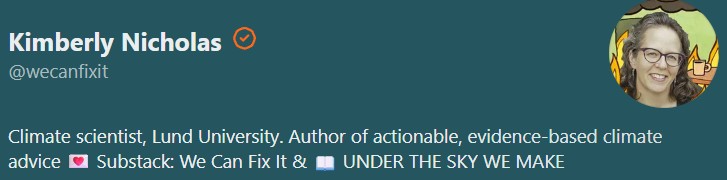
WNCAN comment: This is a September 2025 article from the BBC about a project named Shift which stands for a very upbeat and ambitious sounding 'Super High-Impact Initiative for Fixing Tomorrow' launched by Professor Kimberly Nicholas, Lund University in Sweden who also produces an always stimulating and often motivating newsletter 'We Can Fix It'.
An Excerpt: "A rising body of research is trying to quantify the impact of personal climate actions. The results show the most powerful impacts may come from some surprising places.
It's hard to get clear-cut evidence on what impact the personal actions we take in our lives can have on climate change.
While there has long been a focus on how to reduce the carbon footprint of what we buy, do and eat, it's harder to pin down the impact of many other measures people take, from community engagement and how we choose to vote, to where we save our money and the impact we can have in our workplaces.
But a growing body of research is revealing just how effective such other actions can be. In short, it seems, they can change a lot more than we might think.
Now a project named Shift (Super High-Impact Initiative for Fixing Tomorrow) has created a questionnaire to help guide people towards their most impactful climate actions, tailored to each person's individual circumstances and based on scientific research.
Kimberly Nicholas, professor at Lund University Centre for Sustainability Studies in Sweden, launched the guide alongside Project Drawdown, a US non-profit which focuses on science-based solutions to climate change. The BBC spoke to Nicholas to find out which personal actions really tend to make the most difference for the climate, according to the evidence."